
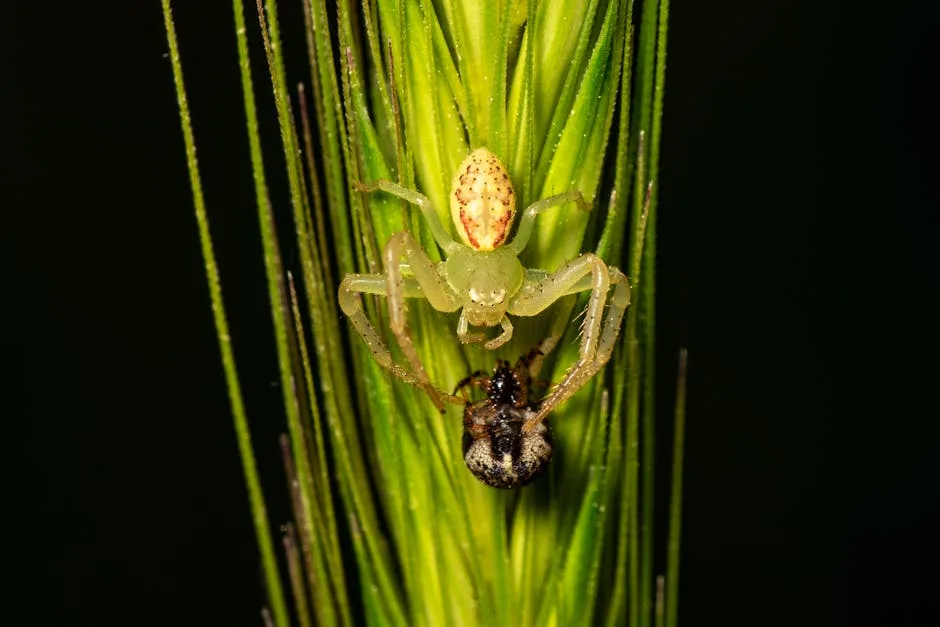
Early-Season Pests: Direct Impact on Tillering and Crop Density
The first weeks of crop development are critical for establishing yield potential. Pests attacking during this phase can compromise tillering, plant density, and initial vigor – factors that cannot be recovered later in the season.
Why the Early Phase Is So Vulnerable
In the first 4-6 weeks after emergence, plants establish:
- Root system – the foundation for water and nutrient uptake
- Secondary shoots – tillering determines the final number of ears/tubers
- Energy reserves – needed for stress resistance
- Uniform density – essential for optimal resource exploitation
Any pest attack during this period disrupts these fundamental processes, with consequences that propagate throughout the rest of the season.
Main Early-Season Pests
Wireworms (Agriotes spp.)
Agriotes larvae attack seed tubers and young roots, causing:
- Emergence gaps (losses that can reach 10-30% of plants)
- Weakening of surviving plants
- Entry points for secondary infections
Aphids (Aphididae)
Early aphid colonies can:
- Transmit devastating viruses (PVY, PLRV)
- Extract sap and reduce vigor
- Multiply explosively in favorable conditions
Leaf Weevils (Sitona spp.)
Adults consume leaf margins, but larvae are more dangerous:
- Larvae destroy root nodules in legumes
- Reduce nitrogen-fixing capacity
- Effects only show at grain filling
Seed Corn Maggot (Delia platura)
Attacks germinating seeds and young seedlings, causing severe density losses especially in cold, wet soils.
Impact on Tillering and Density
Losses Are Hard to Recover
| Density Loss | Yield Impact | Possible Compensation? |
|---|---|---|
| 5-10% | 3-8% loss | Partial, through tillering |
| 10-20% | 12-20% loss | Limited |
| >20% | >25% loss | Not possible |
Note: The values in the table are indicative and can vary significantly by variety, technology, and soil-climate conditions.
Unlike foliar damage during the season that can be partially compensated, early-phase density losses are often hard to recover. Every lost plant represents a space that remains unproductive.
Cascade Effect on Tillering
Plants stressed by early pest attack:
- Produce fewer secondary shoots
- Tiller later and more weakly
- Redirect energy to repair instead of growth
- Become more vulnerable to later stress (drought, diseases)
Correct Intervention Timing
Prevention vs Curative Treatment
For early-season pests, prevention is much more effective than curative treatment:
| Approach | Efficacy | Cost/Benefit |
|---|---|---|
| Seed treatment | 85-95%* | Excellent |
| In-furrow application at planting | 80-90%* | Very good |
| Foliar treatment at first signs | 60-75%* | Moderate |
| Late treatment (visible damage) | 30-50%* | Poor |
*Efficacy figures are indicative and depend on product, dose, pest pressure, and application conditions.
Critical Application Windows
| Pest | Optimal Window | Application Type |
|---|---|---|
| Wireworms | At planting | Seed treatment + in-furrow |
| Aphids | Emergence - 4 leaves | Systemic from seed or early foliar |
| Seed maggot | Before sowing | Seed treatment |
| Weevils | First feeding signs | Foliar at field margins |
Choosing the Right Product
Selection Criteria
For early protection, choose products that offer:
- Sufficient persistence – protection during the critical period (typically 3-4 weeks)
- Systemic activity – distribution throughout the young plant
- Adequate spectrum – coverage for predominant pests in the area
- Compatibility – with fungicides and fertilizers used
Modern, Targeted Solutions
New generation insecticides offer effective protection with minimal impact on beneficial organisms:
| Active Substance | Mode of Action | Advantages |
|---|---|---|
| Cyantraniliprole | Ryanodine receptor modulator | Systemic, broad spectrum, bee-safe |
| Flupyradifurone | Butenolide nicotinic agonist | Effective on aphids, favorable ecotox profile |
| Spirotetramat | Lipid synthesis inhibitor | Bi-directional systemic, good persistence |
Strategies for Strong Crop Development
1. Risk Assessment Before Planting
- Check field history for soil pests
- Assess aphid pressure from previous years
- Consider preceding crops and neighbors
2. Integrated Protection at Planting
- Choose treated seeds/tubers for risk areas
- Apply in-furrow products for high wireworm pressure
- Ensure optimal emergence conditions (depth, moisture)
3. Active Early Monitoring
- Install yellow traps for aphids before emergence
- Inspect weekly for the first 4-6 weeks
- Act immediately when treatment threshold is exceeded
4. Stress Reduction for Rapid Recovery
If attack has already occurred, minimize additional stress:
- Avoid excessive nitrogen fertilization (stimulates pests)
- Ensure uniform irrigation if available
- Apply biostimulants for recovery
Economic Calculation: Why Early Protection Pays Off
The scenarios below are illustrative and must be adapted to local prices, technologies, and conditions.
| Scenario | Treatment Cost | Loss Avoided | ROI |
|---|---|---|---|
| Preventive seed treatment | ~50-80 €/ha | 15-25% yield | 5-10x |
| Early curative treatment | ~40-60 €/ha | 10-15% yield | 3-5x |
| Late treatment (damage already done) | ~40-60 €/ha | 5-8% yield | 1-2x |
Investment in early protection often delivers a good return, especially in areas with high pest pressure. The cost of preventive seed treatment is frequently a small share of potential harvest value, but actual savings vary by season and technology.
Conclusion
Early-season pests pose a serious threat to production potential, directly affecting tillering and crop density – factors that cannot be recovered later. The correct approach combines:
- Risk assessment based on field history
- Preventive protection for high-risk areas
- Active monitoring in the early phase
- Rapid intervention with modern, targeted products
Modern crop protection solutions enable strong plant development with minimal stress, ensuring the density and vigor needed to realize full production potential.
This article is for informational purposes and does not replace professional agronomic advice. Always consult local specialists and follow applicable regulations for plant protection product use.